

Can you put an enameled cast iron Dutch oven in the dishwasher? The answer depends on the cookware brand, product model, and the materials used in its components.
Some enameled cast iron cookware is technically dishwasher-safe, while other manufacturers recommend hand washing only. Even when dishwasher use is permitted, repeated cycles may gradually affect the appearance of the enamel finish.
This is why it is important to check the manufacturer's care instructions rather than assuming that every enameled cast iron pot can be cleaned in the same way.
In this guide, we explain when dishwasher use may be acceptable, why hand washing is often recommended, which product components require special attention, and how to protect your cookware during cleaning.
Quick Answer: Some enameled cast iron cookware can go in the dishwasher, but not all products are dishwasher-safe. Check the care instructions for your specific model, including its lid, knob, handles, and decorative components. When the instructions are unclear, hand washing is the safer default for preserving the finish.
Is Enameled Cast Iron Dishwasher-Safe?
Enameled cast iron has a glass-like coating bonded to a cast iron body. Unlike traditional bare cast iron, its enameled cooking surface does not depend on a seasoning layer for routine protection.
However, this does not automatically mean that every enameled cast iron product is suitable for dishwasher cleaning.
Manufacturers have different recommendations based on their product construction, enamel finish, additional materials, and care requirements.
For example, official guidance from several established cookware brands illustrates these differences:
| Manufacturer | Dishwasher Guidance |
|---|---|
| Lodge | Technically dishwasher-safe, but hand washing is preferred to preserve the finish |
| STAUB | Dishwasher-approved, but hand washing is recommended |
| Le Creuset | Most enameled cast iron products are dishwasher-safe, with exceptions for certain components and accessories |
| Meyer | Hand washing is recommended; dishwasher use is not recommended |
These are examples of brand-specific guidance, not universal rules for every product in each manufacturer's range.
The important point is that dishwasher compatibility must be confirmed for the actual cookware model.
A product described as enameled cast iron should not automatically be labeled dishwasher-safe without checking its complete construction and manufacturer's instructions.
Why Do Manufacturers Recommend Hand Washing?
Even when dishwasher use is permitted, hand washing is often recommended to preserve the cookware's appearance and condition.
There are several reasons for this.
1. Repeated Dishwashing May Dull the Enamel Finish
The glossy appearance of enameled cast iron is an important part of its design.
Repeated exposure to dishwasher cycles and cleaning products may gradually reduce the original gloss of some enamel finishes.
For example, Le Creuset states that constant dishwashing may cause enamel dulling, although this does not necessarily affect cooking performance. Lodge and STAUB also recommend hand washing to help preserve the finish.
A change in appearance should be distinguished from actual enamel damage. Dulling alone is not the same as chipping or cracking.
2. Exposed Cast Iron Edges Need Attention
Some enameled cast iron products have exposed cast iron areas around the rim or lid edge.
These areas are not protected in the same way as the enamel-coated surfaces.
If moisture remains around the exposed metal, rust may develop.
Thorough rinsing and drying are therefore important, regardless of whether the product is cleaned by hand or in a dishwasher.
3. Dishwasher Detergents and Cleaning Conditions Vary
Dishwashers use different detergent formulations, water temperatures, cycle durations, and drying methods.
Not every cookware manufacturer evaluates its products under the same conditions.
A product approved for dishwasher cleaning should still be used according to its specific care instructions.
Avoid assuming that stronger detergents or more intensive cleaning cycles will produce better results.
4. Heavy Cookware Needs Proper Support
Enameled cast iron is considerably heavier than many conventional cookware materials.
A large Dutch oven can place substantial weight on a dishwasher rack.
If the rack is not designed to support the product, loading it may cause instability or damage.
The cookware should also have sufficient clearance from other dishes, metal utensils, and hard surfaces to prevent accidental impacts.
What Should You Check Before Putting a Dutch Oven in the Dishwasher?
Before loading your cookware, review the following four points.
Check the Manufacturer's Care Instructions
Look for the product's original use-and-care booklet, packaging instructions, or official product information.
Do not rely solely on a general statement about enameled cast iron.
The instructions should apply to the exact model and its included components.
If the manufacturer specifically says hand wash only or advises against dishwasher use, follow that recommendation.
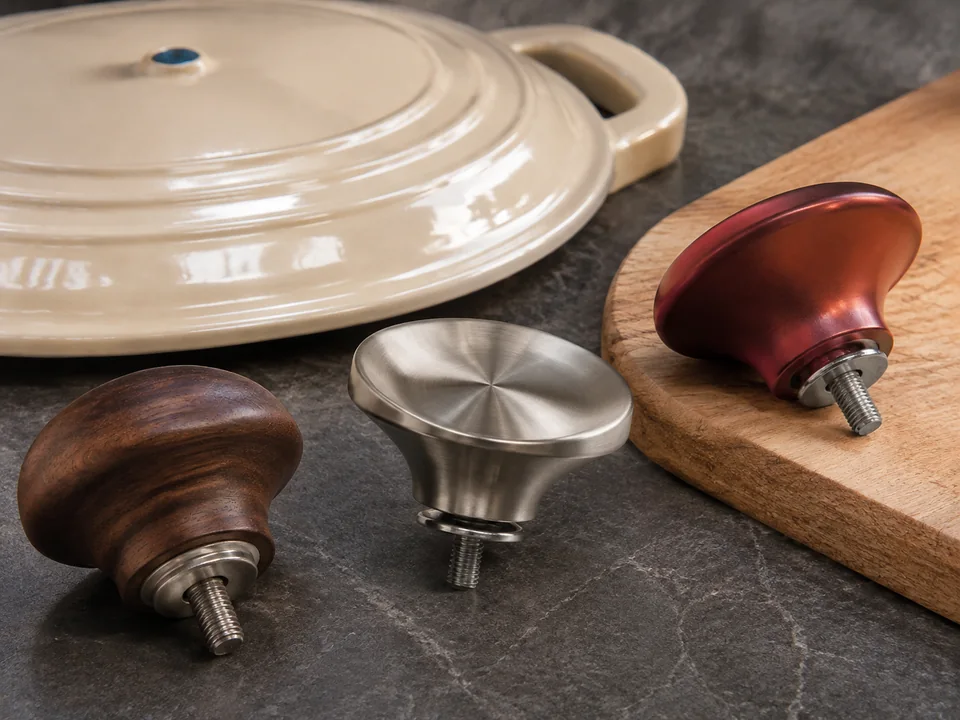
Check the Lid, Knob, and Accessories
The pot body is not necessarily the only part that determines dishwasher compatibility.
Some cookware includes components made from different materials.
Examples include:
Wooden handles or knobs.
Certain colored metal knobs.
Decorative decals or printed details.
Enamel-on-steel lids.
Additional accessories supplied with the cookware.
Some manufacturers explicitly exclude these components from dishwasher use even when the main cast iron body is approved.
Do not assume that a removable knob or accessory can be placed in the dishwasher simply because it can be detached.
Check whether the manufacturer provides separate cleaning instructions.
Check the Dishwasher Rack Capacity
Make sure the dishwasher rack can support the complete cookware product.
Consider the weight of both the pot and its lid.
A large Dutch oven should not be forced into a rack that cannot hold it securely.
If the product cannot be positioned safely, hand washing is a more practical option.
Check for Adequate Space
The cookware should sit securely without pressing against other dishes or the dishwasher door.
Avoid placing heavy items where they may fall, shift, or strike the enamel during the cycle.
The pot, lid, and other components should be positioned according to the cookware and dishwasher manufacturers' instructions.
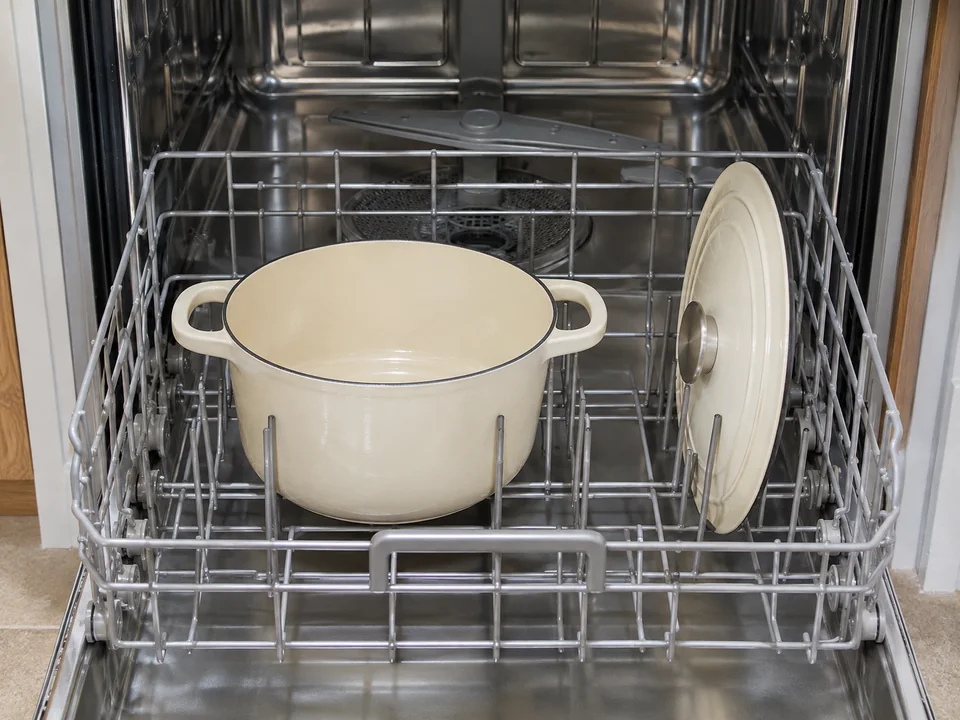
How to Put Dishwasher-Safe Enameled Cast Iron in the Dishwasher
If the manufacturer explicitly approves dishwasher cleaning for your particular product, follow these precautions.
Step 1: Allow the Cookware to Cool
Never place a hot Dutch oven directly into a dishwasher.
Allow it to cool to room temperature before cleaning.
A sudden temperature change can place stress on the enamel coating and may lead to cracking or other damage.
Step 2: Remove Large Food Residue
Remove remaining food particles before loading the cookware.
You do not need to scrub the enamel aggressively.
For stubborn residue, use the cleaning method recommended by the cookware manufacturer.
Step 3: Position the Cookware Securely
Place the pot and lid in the dishwasher only in positions approved by the manufacturer.
Make sure the rack can support their weight and that the cookware will not collide with other items during the cycle.
Do not stack heavy dishes inside or on top of the Dutch oven.
Step 4: Use the Recommended Dishwasher Settings
Follow the cookware manufacturer's detergent and cycle recommendations.
Do not assume that every product can tolerate every dishwasher setting.
If the manufacturer specifies particular detergent restrictions or cycle requirements, follow them.
Step 5: Allow the Cycle to Finish
If dishwasher use is approved, allow the cycle to finish according to the manufacturer's instructions.
Some manufacturers specifically recommend completing the drying stage before opening the dishwasher.
Step 6: Check and Dry the Cookware
After cleaning, inspect the pot, lid, rim, and other components.
If moisture remains around exposed cast iron areas, dry them thoroughly with a clean cloth.
Do not put the cookware away while it is still damp.
What Happens If You Put Enameled Cast Iron in the Dishwasher Regularly?
Regular dishwasher use does not necessarily mean that cookware will immediately become damaged.
However, several changes may occur over time.
The Enamel May Lose Some of Its Gloss
Some glossy enamel finishes may become less shiny after repeated dishwasher cleaning.
This is primarily an appearance consideration.
As noted in Le Creuset's care instructions, enamel dulling from constant dishwashing is not necessarily harmful and does not automatically affect cooking performance.
The exact result depends on the product and its finish.
Exposed Metal Areas May Develop Rust
If moisture remains around exposed cast iron rims or edges, rust may appear.
This is why drying remains important even after a dishwasher cycle.
Product Components May Have Different Wear Patterns
Knobs, handles, decorative elements, and accessories may respond differently to repeated cleaning.
A product should be evaluated as a complete assembly rather than assuming that the enamel-coated body determines the care requirements of every component.
What If Your Enameled Dutch Oven Already Looks Dull?
A dull appearance does not automatically mean that the cookware is unusable.
First, distinguish between cosmetic changes and physical damage.
Cosmetic Dulling
If the enamel has simply lost some of its original gloss but remains intact, the change may be related to normal use or repeated cleaning.
Do not try to restore the finish with steel wool, aggressive polishing compounds, or unapproved chemical cleaners.
Follow the manufacturer's recommendations for maintaining the particular enamel surface.
Physical Damage
Chips, cracks, flaking, and exposed metal are different from ordinary surface dulling.
If the interior cooking surface is chipped or the enamel is visibly deteriorating, stop using the affected cookware until the manufacturer has assessed its condition.
Do not attempt to repair a food-contact enamel surface with household paint, glue, or other unapproved coatings.
For more information about general cleaning methods and everyday maintenance, read our guide to [How to Clean and Care for Enameled Cast Iron Cookware].
Should You Choose Hand Washing or Dishwasher Cleaning?
For most owners, hand washing is a practical choice even when dishwasher use is technically permitted.
It allows more control over the cleaning process and helps avoid unnecessary exposure to repeated dishwasher cycles.
| Consideration | Hand Washing | Dishwasher |
|---|---|---|
| Compatibility | Suitable for most enameled cookware when using approved methods | Depends on the specific product |
| Cleaning control | More direct control over tools and pressure | Automated cleaning cycle |
| Enamel appearance | Generally preferred for preserving the finish | Repeated use may dull some finishes |
| Large cookware | Requires manual handling | Requires sufficient rack capacity |
| Special components | Can be cleaned separately according to instructions | May require separate hand washing |
| Drying | Direct towel drying is possible | Depends on the drying cycle and product instructions |
If you want to preserve the original appearance of your cookware over the long term, hand washing is generally the more conservative approach.
If convenience is your priority and the manufacturer clearly permits dishwasher cleaning, you can follow the approved instructions.
There is no need to use the dishwasher simply because the product is labeled dishwasher-safe.
Dishwasher Care Instructions for Cookware Brands and Wholesale Buyers
For cookware manufacturers, importers, and private-label brands, dishwasher compatibility is also an important product specification.
Customers frequently look for dishwasher-safe cookware when comparing products.
However, this claim should not be added to product listings or packaging without confirming that it applies to the complete product.
Confirm Compatibility for Each Product Configuration
A cookware collection may include different pot shapes, sizes, lid designs, knobs, and decorative finishes.
The dishwasher guidance should be checked against the actual product configuration.
For example, two Dutch ovens with the same enamel body may have different care requirements if their lid knobs or accessories use different materials.
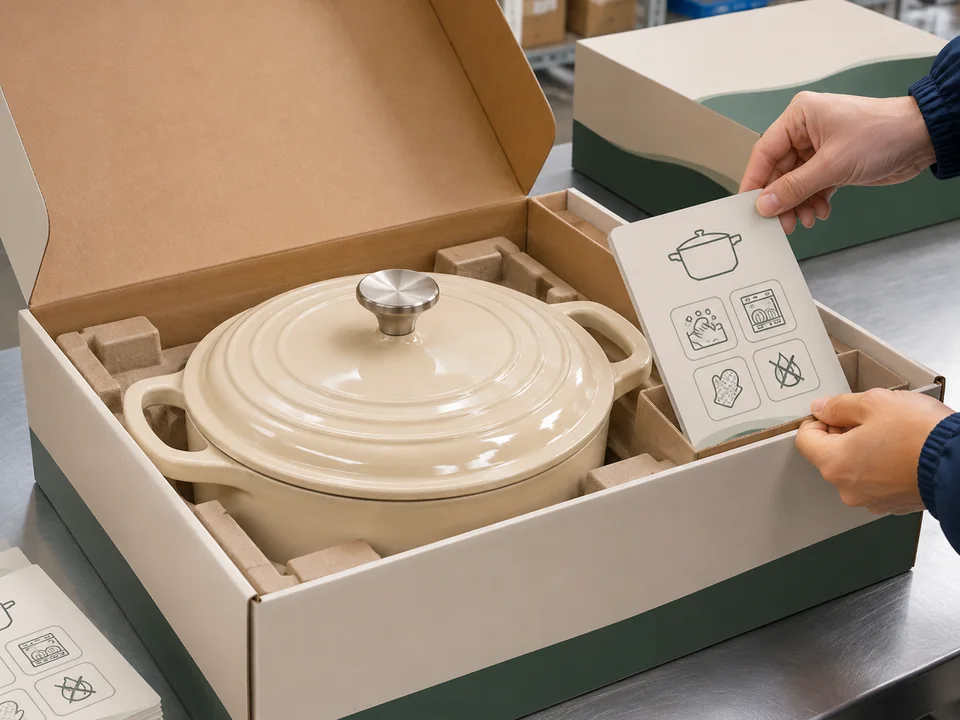
Prepare Clear Care Instructions
For wholesale and private-label projects, buyers should confirm:
Whether the complete product is dishwasher-safe.
Whether the lid and knob have separate cleaning restrictions.
Whether accessories require hand washing.
Whether repeated dishwasher use affects the finish.
Whether any detergent or cycle restrictions apply.
How the product should be dried and stored.
Which instructions should appear on the product insert and packaging.
Avoid Unsupported Dishwasher-Safe Claims
A dishwasher-safe claim can influence customer expectations and purchasing decisions.
If a product has not been verified for dishwasher use, do not automatically advertise it as dishwasher-safe simply because it has an enamel coating.
The final product documentation should match the actual construction, manufacturer's guidance, and applicable product testing.
For OEM and private-label cookware projects, discuss these requirements before approving the final sample and packaging design.
The Bottom Line
Can enameled cast iron go in the dishwasher?
Sometimes, yes. But dishwasher compatibility depends on the specific product, its components, and the manufacturer's instructions.
Some brands permit dishwasher cleaning but recommend hand washing to preserve the enamel finish. Others advise against dishwasher use altogether.
Before loading your Dutch oven, check the care instructions, inspect its lid and knob materials, and make sure the dishwasher rack can safely support the cookware.
When in doubt, hand washing is the more conservative choice.
For cookware brands and wholesale buyers, clear and accurate care instructions are equally important. Dishwasher compatibility should be confirmed for the finished product rather than assumed from the enamel coating alone.