
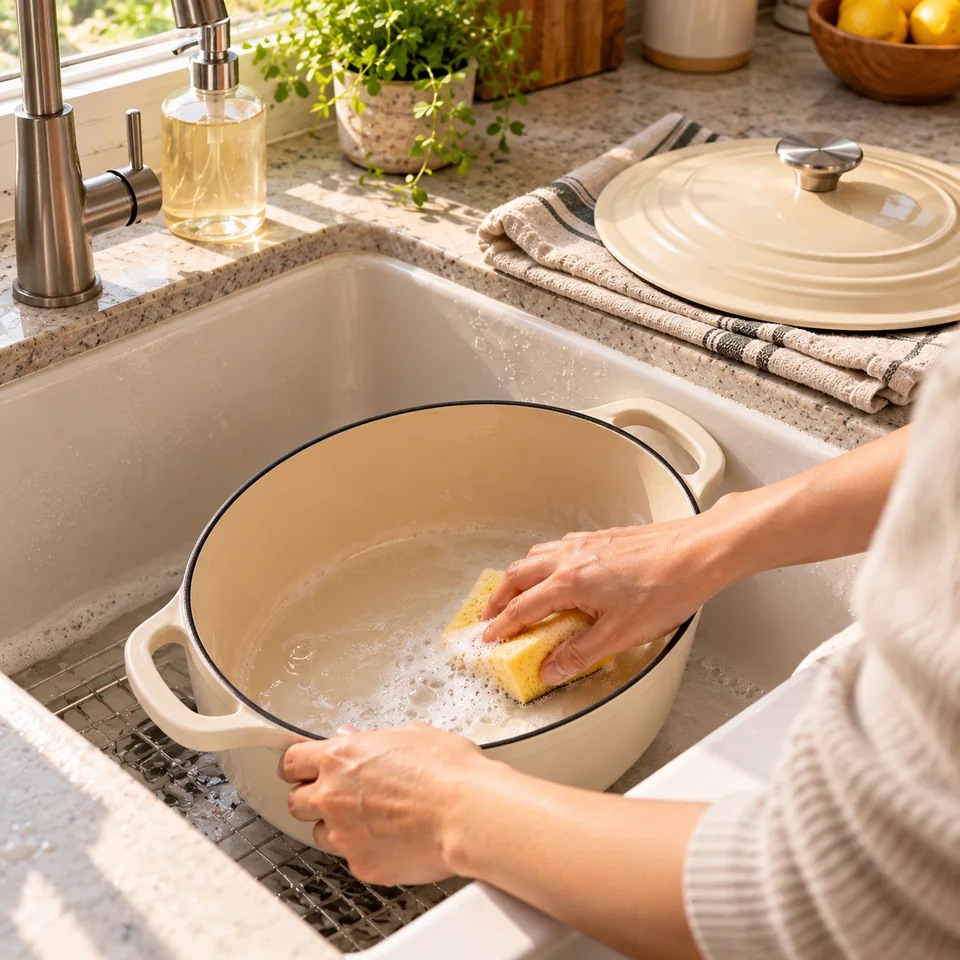
Enameled cast iron cookware is valued for its durability, heat retention, and attractive finish. Whether you use a Dutch oven for slow-cooked meals or an enameled skillet for everyday cooking, proper cleaning helps protect the surface and keep the cookware looking its best.
Unlike traditional bare cast iron, enameled cast iron has a glass-like coating that generally does not require routine seasoning. This makes daily maintenance relatively straightforward, but the coating still needs protection from abrasive cleaning tools, strong impacts, and sudden temperature changes.
The good news is that most everyday cleaning requires only warm water, mild dish soap, a soft sponge, and a little patience.
This guide explains how to clean enameled cast iron cookware safely, deal with stubborn residue and discoloration, prevent damage, and store your cookware properly.
Quick Answer: Let enameled cast iron cool before washing it with warm water, mild dish soap, and a soft, non-abrasive sponge. For stuck-on food, soak the cooled cookware in warm, soapy water before cleaning gently. Avoid steel wool, harsh abrasive cleaners, and sudden temperature changes. Rinse and dry the cookware completely before storing it.
How to Clean Enameled Cast Iron in 5 Simple Steps
The following routine works for most enameled cast iron Dutch ovens, casseroles, and skillets. Always check the care instructions for the specific product before using a cleaning method.
Step 1: Let the Cookware Cool Naturally
After cooking, turn off the heat and allow the cookware to cool before washing.
Do not place a very hot Dutch oven directly under cold running water or fill it with cold water. A rapid temperature change can place stress on the enamel coating and may cause cracking or other damage.
For everyday cleaning, waiting until the cookware has cooled to a safe handling temperature is a simple way to protect the finish.
Step 2: Use Warm Water and Mild Dish Soap
Once the cookware has cooled, wash it with warm water and a small amount of mild dish soap.
Ordinary dish soap is suitable for routine cleaning of most enameled cast iron cookware.
Pay attention to both the cooking surface and the exterior, especially around handles, rims, and areas where food or grease may collect.
Step 3: Clean With a Soft Sponge or Brush
Use a soft sponge, non-abrasive cleaning cloth, or suitable nylon brush to remove ordinary food residue.
Gently clean the surface rather than applying excessive pressure.
Avoid steel wool, metal scouring pads, and sharp scraping tools. These can mark or scratch the enamel, and forceful cleaning may damage the finish.
If food does not release easily, soaking is usually preferable to aggressive scrubbing.
Step 4: Rinse Thoroughly
Rinse away soap and loosened food residue with clean water.
Check the inside corners, handles, and underside of the rim to make sure no detergent or residue remains.
The goal is to leave the cooking surface clean without using unnecessarily harsh cleaning methods.
Step 5: Dry Completely
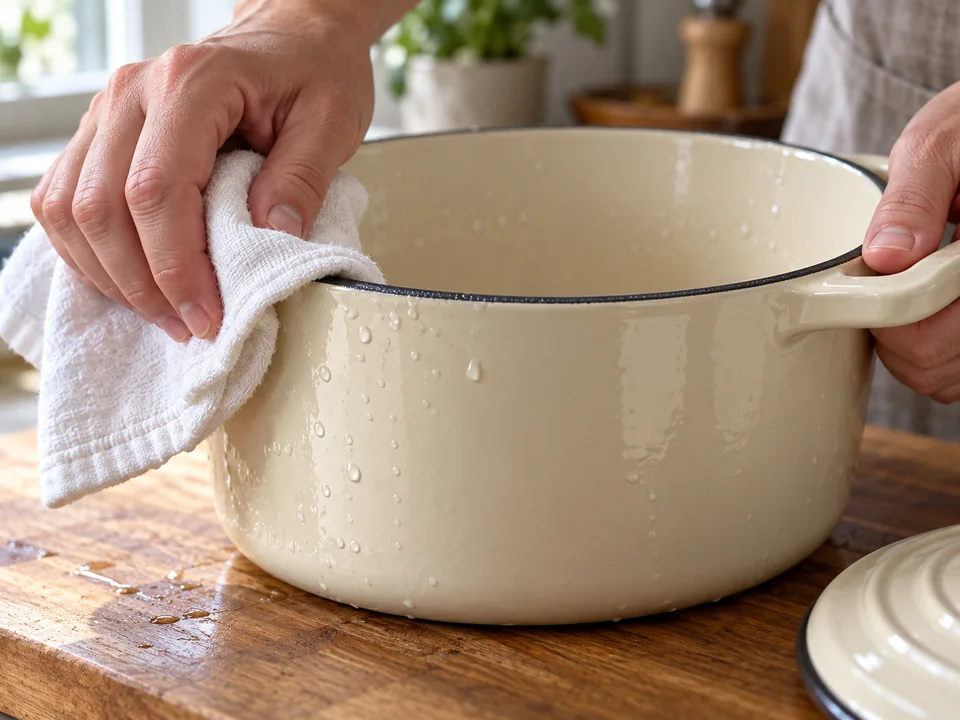
After washing, dry the pot and lid with a clean, soft towel.
Pay particular attention to the rim, lid edge, handle areas, and any exposed cast iron surfaces. Moisture left around these areas may contribute to rust.
Allow remaining moisture to evaporate before closing the lid or placing the cookware into a cabinet.
A consistent routine of cooling, gentle washing, rinsing, and drying is usually sufficient for everyday care.
How to Remove Burnt or Stuck-On Food
Food occasionally sticks to the bottom of a Dutch oven or enameled skillet, particularly after searing, braising, or cooking dishes with thick sauces.
The safest approach is to soften the residue before trying to remove it.
Start With Warm, Soapy Water
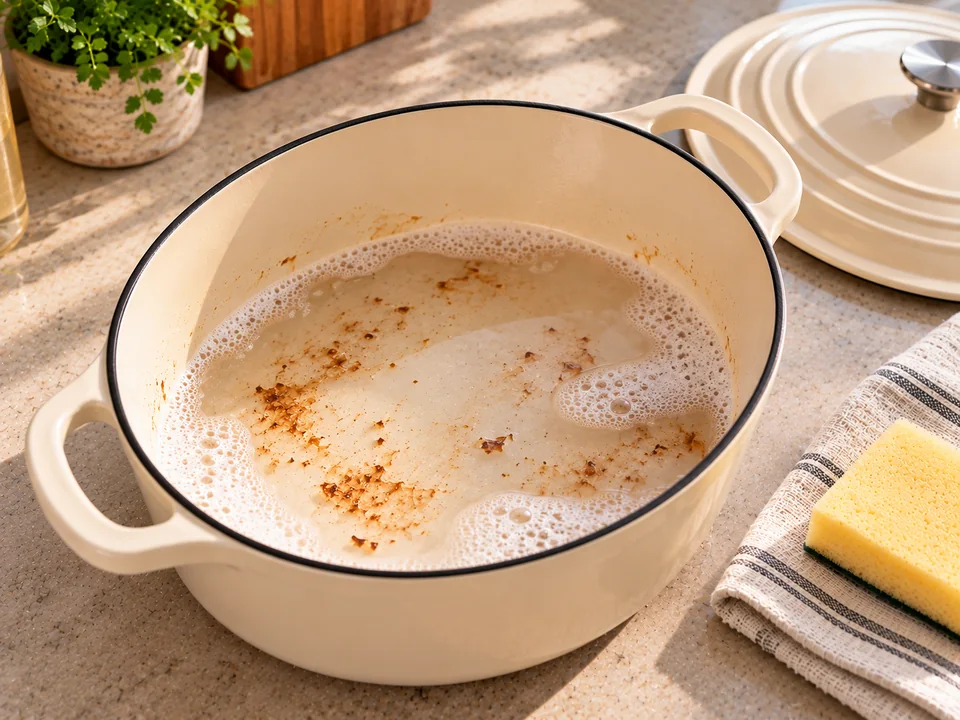
Allow the cookware to cool, then add enough warm water to cover the affected area.
Add a little mild dish soap and let the cookware soak for approximately 15–20 minutes, or longer if permitted by the manufacturer's instructions.
After soaking, use a soft sponge or nylon brush to loosen the residue.
Repeat the process if necessary. Avoid scraping the surface with a knife or metal utensil.
What About Very Stubborn Residue?
For residue that remains after soaking, consult the manufacturer's recommended deep-cleaning method.
Some cookware manufacturers recommend gently simmering water with baking soda to help release baked-on food. However, specific quantities and methods vary by product.
Do not assume that a strong cleaning mixture or an abrasive paste is suitable for every enamel finish.
Use only cleaning products and techniques approved for the cookware you own.
Avoid Forcing the Residue Off
Scrubbing harder is not always the best solution.
Aggressive scraping can damage the enamel surface, especially when a hard tool is used against a stubborn deposit.
If the residue does not loosen, repeat a gentle soaking process or follow the manufacturer's instructions for persistent deposits.
How to Deal With Stains and Discoloration
A light-colored enamel interior may gradually develop brown marks, cooking stains, or other visible discoloration.
This does not automatically mean that the enamel has been damaged.
Some staining can develop through normal use and may remain visible even after the cookware has been cleaned.
Light Brown or Yellowish Stains
Brown or yellowish marks may develop after repeated cooking, particularly with sauces, oils, and richly colored ingredients.
Start with ordinary washing using warm water, mild dish soap, and a soft sponge.
If the stain remains, use an enamel-compatible cleaning product according to both the cookware manufacturer's and cleaner manufacturer's instructions.
A cosmetic stain is different from a physical defect such as chipped or cracked enamel.
Gray Marks on Light Enamel
Gray marks may appear when metal utensils contact the enamel surface.
These marks can sometimes be surface deposits rather than deep scratches, but they should not be treated as harmless without inspection.
An approved enamel cleaner may help remove certain metal marks.
To minimize future marks, consider using wooden, silicone, or other suitable non-abrasive utensils.
When Should You Be Concerned?
Stains and discoloration should be distinguished from surface damage.
A chipped, flaking, or visibly cracked food-contact surface is not the same as an ordinary cooking stain.
If the enamel appears physically damaged, stop using the affected cooking surface until the manufacturer can advise whether the cookware remains suitable for use.
Avoid attempting to repair food-contact enamel with household paint, glue, or unapproved coatings.
How to Prevent Enamel Damage During Cooking
Good cookware care begins before washing.
Many cleaning problems become easier to avoid when enameled cast iron is used with appropriate heat settings and utensils.
Avoid Sudden Temperature Changes
Cast iron retains heat well, but abrupt temperature changes can stress the enamel coating.
Allow the cookware to heat and cool gradually.
Do not transfer a hot pot directly into cold water, and avoid placing a very cold vessel onto a high-temperature cooking surface.
These habits help reduce the risk of thermal shock.
Use Appropriate Heat Settings
For many everyday cooking tasks, low to medium heat is sufficient once enameled cast iron has warmed up.
Excessive heat can cause food to burn, stick, or leave difficult residue on the cooking surface.
Follow the manufacturer's preheating guidance. Some enameled products should not be heated empty on a stovetop.
Choose Suitable Cooking Utensils
Wooden, silicone, and other suitable non-abrasive utensils can help protect the enamel finish.
Avoid cutting directly inside the pot or striking the rim with hard metal tools.
Careful utensil use helps minimize scratches, metal transfer marks, and accidental impact damage.
Protect the Rims and Exterior
The rim and outer surfaces also need attention.
Avoid knocking the lid against the pot and placing heavy cookware against hard surfaces.
When cleaning, inspect the rim and handles for trapped residue and moisture.
After washing, gently dry the rim and other hard-to-reach areas before storage.
How to Store Enameled Cast Iron Cookware
Proper storage helps protect enamel from unnecessary impacts, scratches, and moisture.
Make Sure Everything Is Dry
Before placing the cookware into a cupboard, check that the pot and lid are completely dry.
Pay particular attention to rim areas, where residual moisture may remain after washing.
Store cookware in a dry, well-ventilated location.
Use Protective Separators
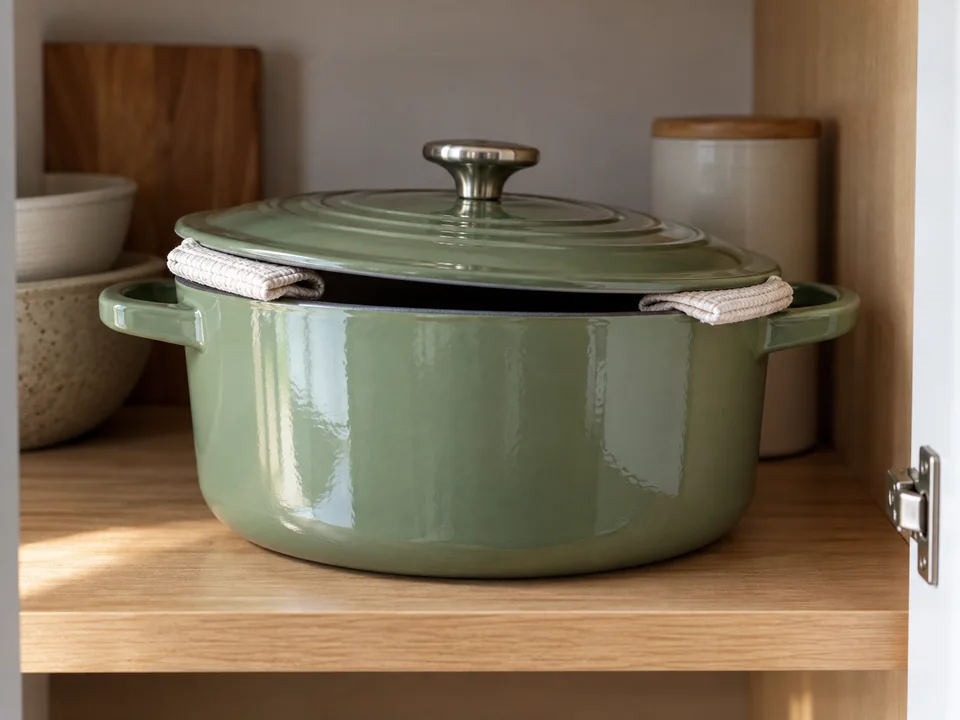
If you store a lid on top of its pot, consider using suitable pot protectors or a soft, clean cloth where the surfaces contact each other.
This helps prevent hard enamel surfaces from rubbing together and may improve airflow, depending on how the cookware is stored.
If stacking multiple pieces, use protective separators and ensure that the arrangement is stable.
Avoid Excessive Stacking
Cast iron cookware is heavy.
Do not stack large, heavy pots in a way that places unnecessary pressure on a lid, handle, or enamel-coated rim.
Consider the weight and shape of each piece when organizing cabinets or cookware shelves.
A small amount of care during storage can help keep the finish in better condition over time.
Care Instructions Matter for Cookware Brands and Wholesale Buyers
For cookware brands, importers, and retailers, cleaning and care instructions are part of the overall product experience.
Customers need clear guidance on how to use and maintain their cookware after purchase.
This is especially important for private-label enameled cast iron collections, where packaging and care materials may be developed specifically for a brand.
Provide Clear Product-Specific Guidance
Care instructions should reflect the actual materials and components used in the cookware.
Important information may include:
Recommended washing and drying methods.
Approved cleaning tools and products.
Instructions for removing stubborn food residue.
Dishwasher suitability for the specific product.
Appropriate heat settings and temperature restrictions.
Storage recommendations.
Guidance on scratches, chips, and other visible surface damage.
Match Instructions to the Finished Product
Different enamel finishes, knobs, lids, and accessories may have different care requirements.
Avoid copying generic instructions without confirming that they apply to the finished product.
For OEM and private-label projects, buyers should review the care instructions during sample approval and packaging development.
Clear, accurate product documentation can help customers use cookware correctly and reduce avoidable after-sales questions.
The Bottom Line
Cleaning enameled cast iron cookware does not have to be complicated.
For everyday maintenance, the most important steps are to allow the cookware to cool, wash it gently with warm soapy water, and dry it thoroughly.
When food sticks, soften the residue rather than forcing it off with abrasive tools.
Protect the enamel from sudden temperature changes, hard impacts, and unnecessary scraping. Before storing, make sure the pot and lid are clean, dry, and appropriately protected.
With consistent care and attention to the manufacturer's instructions, enameled cast iron cookware can remain a dependable part of everyday cooking for years.