
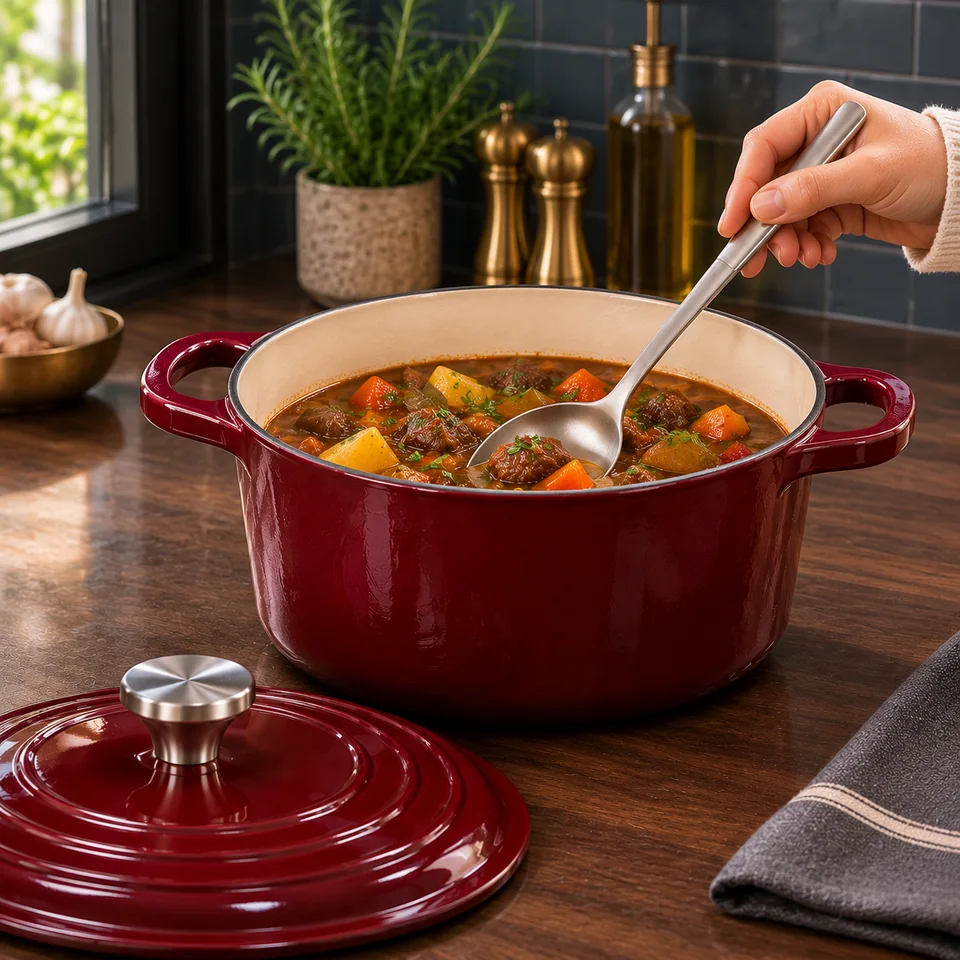
Enameled cast iron cookware is known for its durable cooking surface, but can you use metal utensils when cooking with it?
The answer depends on the cookware manufacturer's recommendations and how the utensils are used.
Some manufacturers recommend avoiding metal utensils because they may scratch the enamel. Others allow certain metal spoons and whisks when used carefully, while warning against sharp edges, aggressive scraping, and impacts against the rim.
Understanding these differences can help you choose suitable kitchen tools and protect the appearance and condition of your cookware.
In this guide, we explain which metal utensils require extra care, why silver-colored marks sometimes appear on enamel, and which alternatives are better suited for everyday cooking.
Quick Answer: Metal utensils are not universally recommended for enameled cast iron. Some products allow careful use of certain metal spoons or whisks, while others recommend using silicone, wood, or nylon utensils instead. Always follow the care instructions for your specific cookware.
Can You Use Metal Utensils on Enameled Cast Iron?
Sometimes, yes. However, metal utensils should never be assumed to be suitable for every enameled cast iron product.
The enamel cooking surface is a hard, glass-like coating bonded to the cast iron body. It is designed for regular cooking, but sharp edges, forceful scraping, and repeated impacts can damage the surface.
Different manufacturers therefore provide different recommendations.
For example:
Lodge recommends wooden, silicone, or nylon utensils for its enameled cast iron cookware and warns that metal utensils can scratch the enamel finish.
Le Creuset recommends silicone, wooden, and heat-resistant plastic tools. Its care instructions also allow certain metal spoons and balloon whisks to be used carefully, provided they are not scraped harshly across the surface or knocked against the rim.
These examples show why there is no single universal rule for all enameled cast iron cookware.
Before using metal utensils, check the instructions supplied with your specific pot, skillet, or casserole.
Does the Type of Metal Utensil Matter?
Yes. The shape, edge, pressure, and movement of a utensil all affect the risk of damaging the enamel.
A smooth, rounded spoon used for gentle stirring is different from a sharp metal scraper dragged forcefully across the cooking surface.
The important consideration is not simply whether a utensil is made of metal, but how it contacts the enamel.
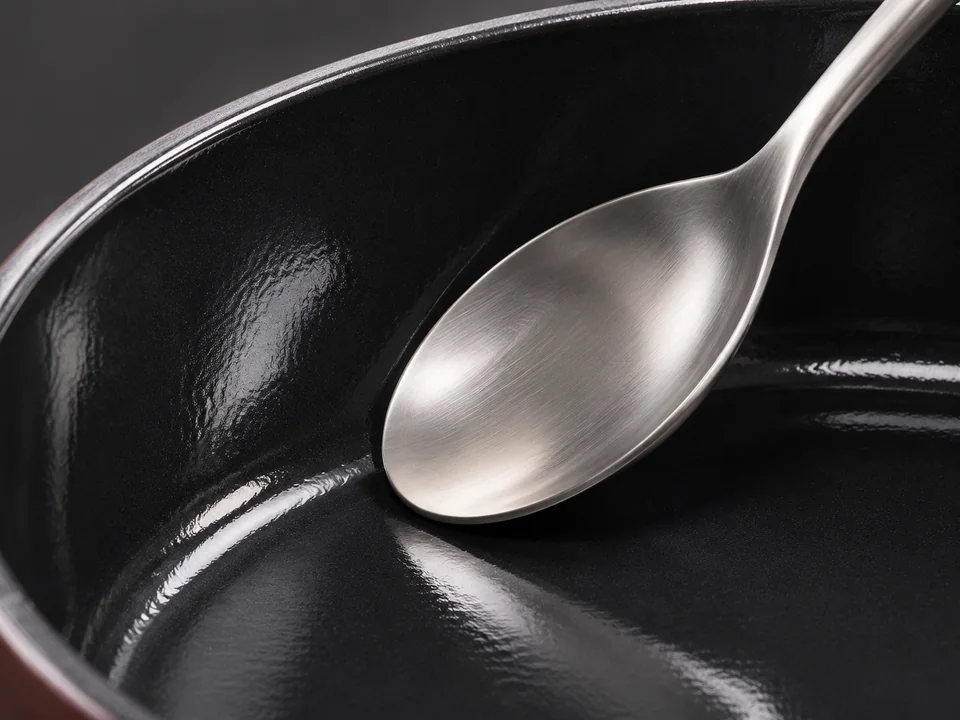
What Happens When Metal Utensils Touch the Enamel Surface?
Metal utensils can leave marks on an enameled cooking surface, but not every mark means the enamel has been damaged.
It is important to distinguish between superficial metal transfer and actual enamel damage.
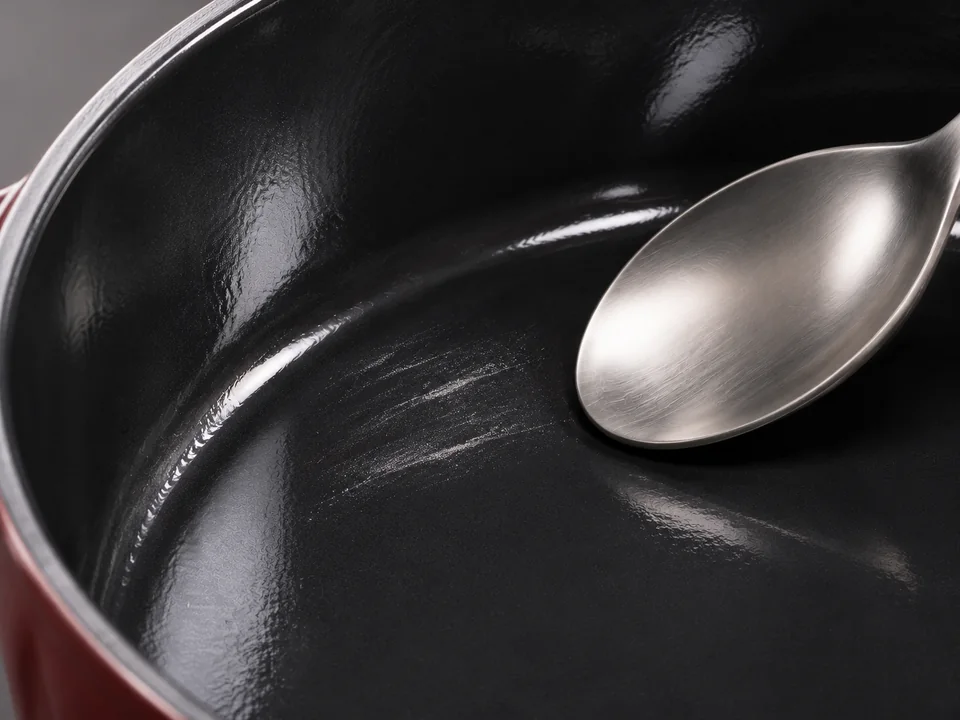
Silver or Gray Metal Marks
Sometimes, using a metal spoon or other utensil leaves a silver-colored or gray streak on the enamel.
These marks may be caused by small amounts of metal transferred from the utensil onto the cookware surface.
They do not automatically indicate that the enamel coating has chipped or worn away.
Le Creuset's care documentation specifically notes that occasional metal utensil use may leave silver trail marks on the surface.
Scratches and Enamel Damage
Actual enamel damage is different.
Look for signs such as:
Visible chips or missing enamel.
Cracks in the cooking surface.
Flaking or peeling.
Areas where the underlying cast iron is exposed.
These conditions should not be treated as ordinary metal marks.
If the interior enamel is visibly chipped or flaking, stop using the cookware and contact the manufacturer for guidance.
Do not attempt to cover exposed areas with household paint, glue, or other unapproved materials.
Which Metal Utensils Should You Avoid?
Some kitchen tools have edges or designs that create a greater risk of scratching or chipping the enamel.
The following tools deserve particular attention.
Metal Knives
Do not cut food directly inside an enameled cast iron pot or skillet.
A knife has a sharp cutting edge that can mark or damage the enamel surface.
Transfer food to a cutting board before slicing or chopping.
Sharp-Edged Metal Spatulas
Some metal spatulas have thin, rigid edges designed to scrape or lift food from cooking surfaces.
Repeated forceful contact with enamel can cause scratches or other damage.
If your manufacturer permits metal tools, use them gently and avoid scraping the cooking surface.
Metal Scrapers
Metal scrapers and hard-edged tools should not be used to remove stuck food from enameled cookware.
They can apply concentrated pressure to the enamel and create scratches or chips.
Use cleaning methods and accessories recommended by the cookware manufacturer instead.
Knocking Metal Utensils Against the Rim
Avoid tapping or striking a metal spoon, spatula, or whisk against the upper rim of the pot.
The rim is an area where repeated impacts may cause enamel chipping.
This is particularly important when transferring food or removing excess sauce from a utensil.
Which Utensils Are Better for Enameled Cast Iron?
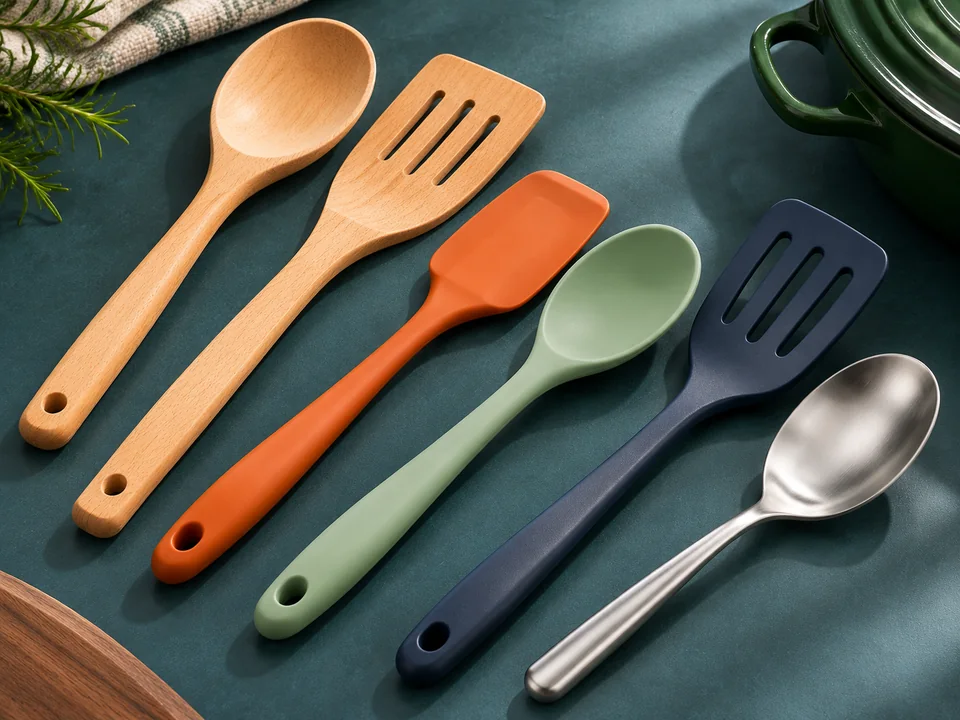
For everyday cooking, silicone, wood, and heat-resistant nylon utensils are generally the more conservative choices.
They provide practical alternatives to direct metal contact with the enamel.
Silicone Utensils
Silicone spatulas and spoons have flexible edges that can follow the shape of the cookware.
They are useful for stirring sauces, folding ingredients, scraping food from the sides, and mixing delicate dishes.
Choose food-contact silicone utensils with an appropriate heat-resistance rating.
Wooden Utensils
Wooden spoons and spatulas are traditional choices for cast iron cookware.
They are suitable for stirring soups, sauces, stews, and other everyday dishes.
Their relatively soft contact surface helps reduce the risk of scratching the enamel.
Heat-Resistant Nylon or Plastic Utensils
Suitable heat-resistant nylon or plastic utensils can also be used with many enameled cast iron products.
Always check the utensil's temperature rating before using it in hot cookware.
Avoid tools that may soften, deform, or melt under normal cooking temperatures.
A Practical Utensil Comparison
| Utensil Type | General Recommendation | Main Consideration |
|---|---|---|
| Silicone spoon or spatula | Recommended | Check heat-resistance rating |
| Wooden spoon or spatula | Recommended | Keep clean and dry between uses |
| Heat-resistant nylon | Recommended | Check maximum temperature |
| Stainless steel spoon | Product-dependent | Gentle use only when approved |
| Metal whisk | Product-dependent | Avoid forceful scraping |
| Sharp metal spatula | Avoid unless specifically approved | Sharp edges may scratch enamel |
| Metal knife | Avoid | Never cut food directly on enamel |
| Metal scraper | Avoid | Can scratch or chip the surface |
The manufacturer's instructions should always take priority over this general comparison.
How to Use Metal Utensils More Carefully
If your cookware manufacturer allows certain metal utensils, a few simple habits can help reduce unnecessary contact and impact.
Use Gentle Stirring Movements
When using an approved metal spoon, stir gently rather than pressing the utensil forcefully against the bottom or sides of the pot.
Avoid repetitive scraping motions.
Avoid Striking the Cookware Rim
Do not knock metal utensils against the rim to remove excess food or liquid.
Use a separate utensil rest or allow excess sauce to drain naturally.
Never Cut Food Inside the Cookware
Use a separate cutting board for knives and other sharp tools.
The cooking surface should not be used as a cutting surface.
Choose the Right Tool for the Cooking Task
A silicone spatula is often more suitable for scraping sauces from the sides of a Dutch oven, while a wooden spoon works well for stirring thicker dishes.
Using an appropriate tool reduces unnecessary pressure on the enamel.
Follow the Product's Specific Instructions
Some manufacturers permit limited metal utensil use, while others advise avoiding metal altogether.
Do not assume that recommendations for one brand or model apply to another.
What Should Cookware Brands and Wholesale Buyers Consider?
For cookware manufacturers, importers, and private-label brands, utensil compatibility is an important part of product documentation and customer education.
Buyers should consider how customers will interact with the enamel surface during everyday cooking.
1. Define Recommended Cooking Utensils
Product documentation should clearly identify which utensils are recommended.
For example:
Silicone cooking tools.
Wooden spoons and spatulas.
Heat-resistant nylon tools.
Metal utensils, if their use is permitted under specific conditions.
Avoid making broad claims such as "scratch-proof" or "safe for all metal utensils" without appropriate product evidence.
2. Explain the Difference Between Metal Marks and Enamel Damage
Customers may mistake superficial metal transfer marks for damaged enamel.
Clear care instructions can help them understand the difference.
However, visible chips, cracks, or flaking should never be dismissed as ordinary metal marks.
3. Pay Attention to the Interior Enamel Finish
Different cookware products may have different interior enamel finishes.
The recommended utensils and handling instructions should be confirmed for the actual product rather than copied from another model.
4. Include Practical Instructions in Retail Packaging
For OEM and private-label projects, buyers can include concise cookware-use guidance in their product inserts or packaging.
Useful topics include:
Recommended utensil materials.
Avoiding sharp metal tools.
Avoiding impacts against the cookware rim.
Not cutting food directly inside the pot.
How to identify visible enamel damage.
Clear instructions help distributors, retailers, and end customers understand how to use the product correctly.
The Bottom Line
Can you use metal utensils on enameled cast iron?
Sometimes, but it depends on the manufacturer's instructions and the way the utensils are used.
Some brands allow careful use of certain metal spoons and whisks, while others recommend using silicone, wood, or nylon tools instead.
Sharp knives, aggressive metal scrapers, forceful scraping, and repeated impacts against the rim should be avoided.
It is also important to distinguish superficial silver-colored metal marks from actual enamel damage.
For everyday cooking, silicone, wooden, and suitable heat-resistant nylon utensils are generally the more conservative choices.
For cookware brands and wholesale buyers, clear utensil recommendations and accurate product-care instructions are important parts of delivering a reliable cookware product.