
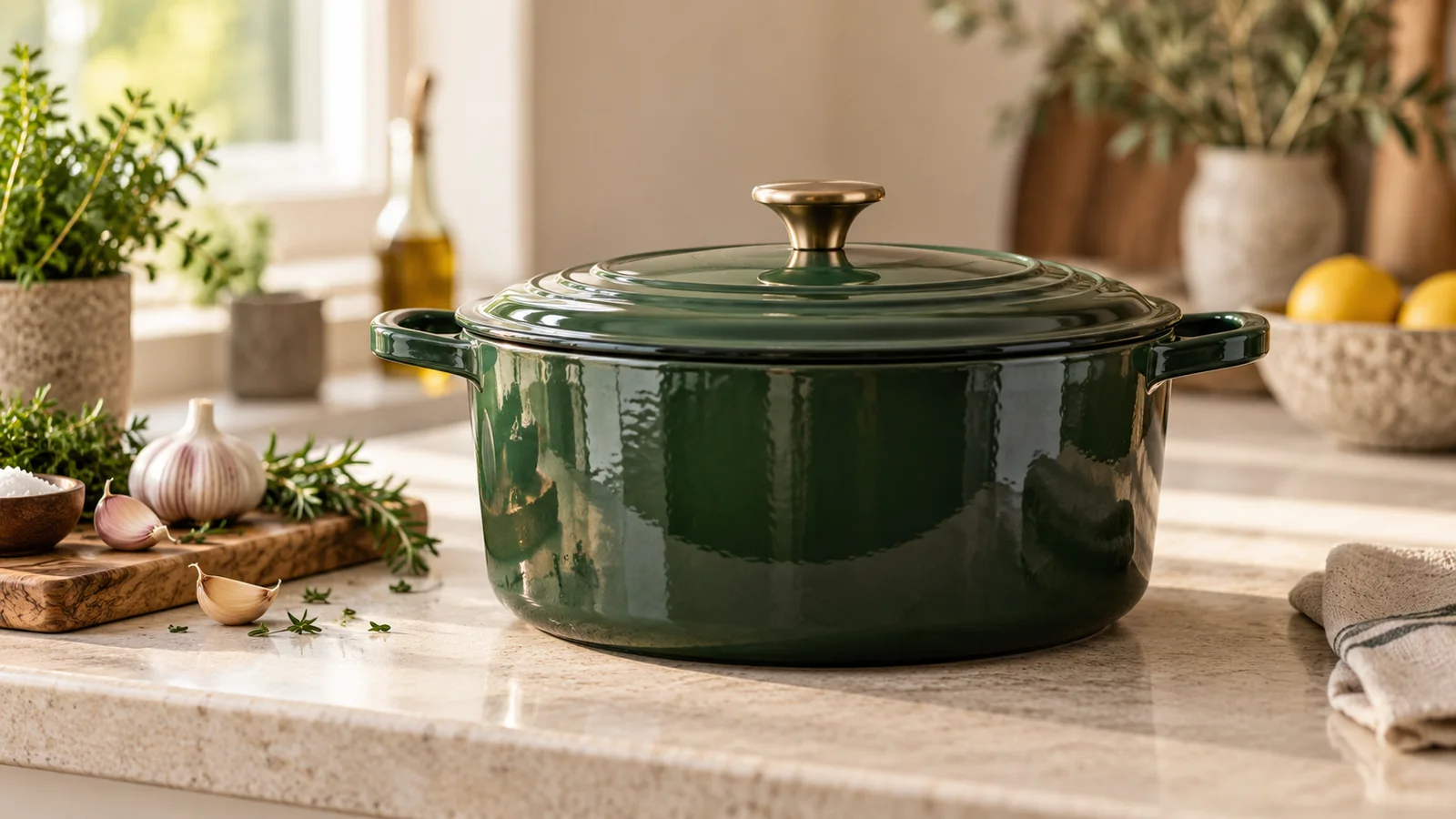
Enameled cast iron cookware is widely used for Dutch ovens, braisers, casseroles, skillets, and other heavy-duty cookware. It combines the heat retention of cast iron with a smooth enamel surface that is easier to maintain than traditional bare cast iron.
Because the cooking surface is coated, many people naturally ask whether enameled cast iron is safe, what the enamel is made of, whether it can react with food, and what happens if the surface becomes chipped or damaged.
The useful answer is not simply that all enamel cookware is “safe” or “non-toxic.” Product safety depends on the materials used, how the enamel is manufactured and fired, whether the finished cookware is intended for food contact, the condition of the surface, and how the cookware is used.
This guide explains the key points consumers and professional cookware buyers should understand.
What Is Enameled Cast Iron?
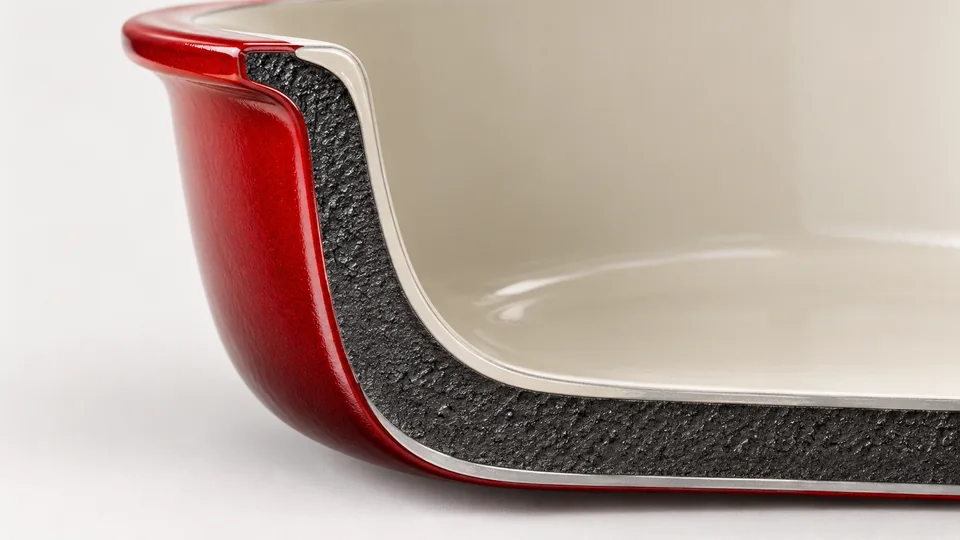
Enameled cast iron starts with a cast iron cookware body. The iron gives the product its familiar weight, strength, and ability to retain heat for long periods.
A vitreous enamel coating is then applied to the prepared cast iron surface. Unlike ordinary paint, vitreous enamel is a glass-like inorganic coating that is fired at high temperature so that it bonds to the metal.
The finished enamel creates a hard, smooth surface over the cast iron. Interior enamel may be cream, black, or another neutral shade, while exterior enamel can be produced in a much wider range of decorative colors.
This coating also changes how the cookware is used. An enameled cooking surface normally does not require the same seasoning routine as bare cast iron, and the enamel separates food from the underlying iron.
That makes enameled cast iron convenient for soups, braises, stews, sauces, roasting, baking, and many other everyday cooking applications.
Is Enameled Cast Iron Safe for Cooking?
Well-made enameled cast iron cookware designed for food contact can be used for normal everyday cooking.
The enamel acts as the main food-contact surface. When the coating is properly formulated, applied, and fired, it forms a stable layer over the cast iron beneath.
Manufacturing quality matters because enamel is not simply sprayed onto a finished pot and allowed to dry. The cast iron must first be prepared, the enamel must be applied consistently, and the cookware must then be fired under controlled conditions.
Poor process control can contribute to visible defects such as uneven coating, pinholes, bubbles, weak adhesion, inconsistent finish, or premature chipping.
Food-contact requirements also matter. Health Canada, for example, describes enamelware as metal coated with glass-like glaze and notes that lead and cadmium migration from applicable food-contact products is regulated. It also recommends using cookware according to the manufacturer’s intended use and instructions.
For consumers, the practical approach is to choose cookware intended for food use from a reliable source and follow the product instructions.
For importers and private-label buyers, the evaluation should go further and include samples, appropriate test documentation, production controls, and consistency between samples and mass production.
Is Enameled Cast Iron Non-Toxic?
“Non-toxic” is a common cookware marketing term, but it is too broad to describe every product accurately.
A more useful evaluation looks at the materials used, the intended food-contact application, manufacturing quality, applicable market requirements, and the condition of the finished surface.
Regulators pay particular attention to substances that may migrate from food-contact materials. Lead and cadmium are examples of substances that are controlled in certain glazed foodware because excessive migration can create health concerns. Health Canada specifically notes this issue for ceramic, enamel, and glass cookware.
That does not mean modern enameled cast iron cookware should automatically be assumed to contain unsafe levels of these substances.
It means that responsible material selection, controlled manufacturing, and suitable testing are more meaningful than a simple marketing claim.
For brands and importers, useful questions include what food-contact documentation the supplier can provide, which market the testing applies to, and how the factory controls enamel consistency between production batches.
Can Enameled Cast Iron Chip or Wear?
Enamel is durable, but it is not indestructible.
Strong impact can damage the surface. Dropping a heavy Dutch oven, striking the rim against another hard object, or repeatedly hitting the enamel with heavy utensils may eventually cause chips or cracks.
Extreme thermal shock should also be avoided. Moving very hot cookware directly into extremely cold water creates a sudden temperature difference between the enamel and the cast iron body.
Minor cosmetic marks and major coating damage are not necessarily the same. However, significant chips, cracks, or areas where the enamel has separated from the cooking surface should be inspected before continued use.
Good durability starts during manufacturing. Surface preparation, enamel application, firing control, rim finishing, packaging, and shipping protection all influence how well the coating performs over time.
How to Use Enameled Cast Iron Cookware Safely
Follow the cookware manufacturer’s intended use and care instructions.
Avoid sudden changes between extremely hot and very cold conditions.
Use heat settings appropriate for the cookware and cooking method.
Avoid repeatedly striking the enamel with heavy or sharp utensils.
Allow very hot cookware to cool before exposing it to cold water.
Follow recommended cleaning practices.
Inspect significant chips or cracks before continued use.
Store heavy cookware carefully to avoid repeated impact between pieces.
What Should Buyers Check Before Ordering?
For brands, wholesalers, importers, and distributors, evaluating enameled cast iron cookware should go beyond appearance and unit price.
A physical sample is one of the best starting points. It allows the buyer to check the actual weight, dimensions, enamel finish, lid fit, rim quality, handle design, color, and packaging.
Surface consistency also matters. Minor variation can occur in enamel production, but repeated pinholes, uneven coverage, rough areas, inconsistent color, or obvious defects may indicate weak process control.
Buyers should identify the destination market before requesting test documentation. Requirements vary by country, and a report prepared for one market or one product configuration may not automatically apply to another.
Custom colors, logos, and packaging should also be approved before mass production. A physical sample is generally a more reliable production reference than a color viewed only on a screen.
For a private-label cookware brand, repeatability is particularly important. One attractive sample is not enough if the supplier cannot reproduce the same quality consistently across future production runs.
Final Thoughts
Enameled cast iron combines the heat-retention characteristics of cast iron with a smooth and durable cooking surface.
For everyday use, properly manufactured cookware intended for food contact can provide a reliable cooking surface when used according to the manufacturer’s instructions.
The important point is that cookware safety should not be reduced to a single marketing phrase. Material quality, controlled manufacturing, appropriate food-contact requirements, surface condition, correct use, and consistent quality control all matter.
For professional buyers, this also means checking samples, relevant documentation, surface quality, packaging, and the supplier’s ability to maintain the same standard across repeat orders.