
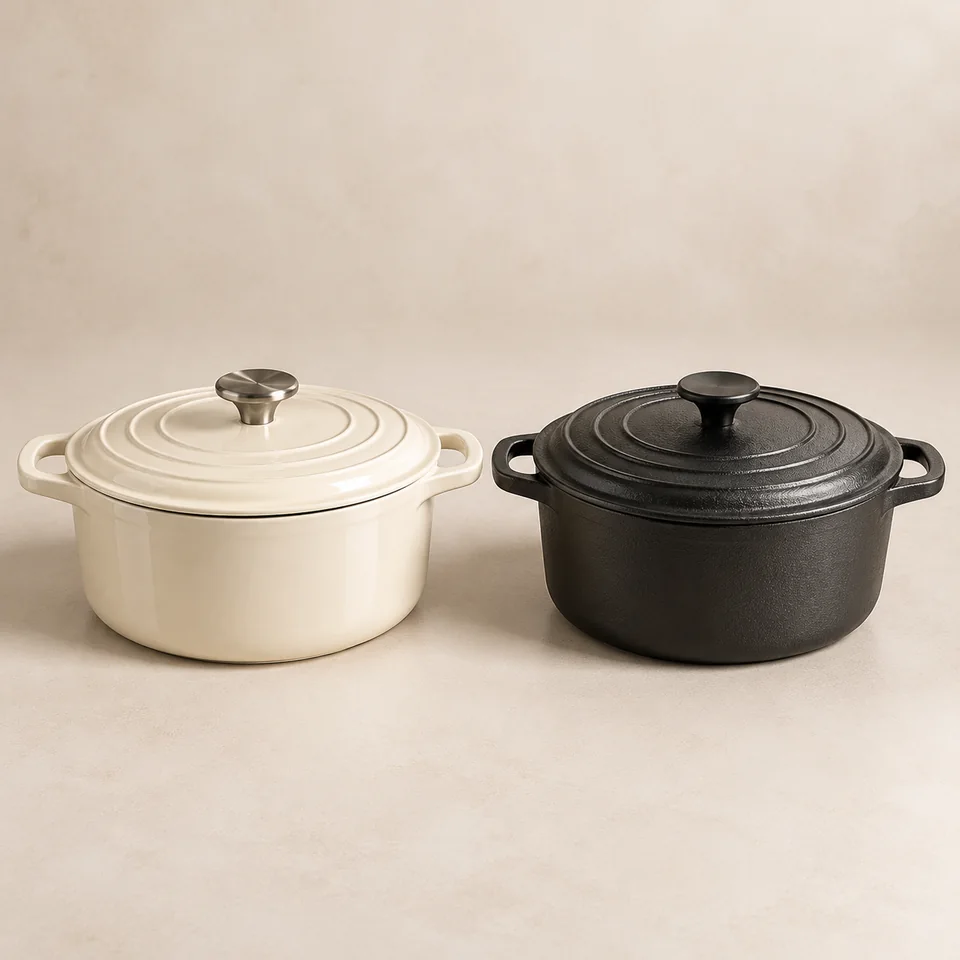
Enameled cast iron and bare cast iron share the same basic material, but they offer different cooking experiences. One has a smooth, glass-like enamel coating, while the other has an exposed iron surface that develops a seasoned cooking layer over time.
The difference affects more than appearance. It influences cleaning, seasoning, the types of dishes you can prepare, and how you care for your cookware over the years.
Whether you are choosing a Dutch oven for your kitchen or evaluating cookware for a retail collection, understanding these differences will help you make a more informed decision.
Enameled Cast Iron vs Cast Iron: Key Differences
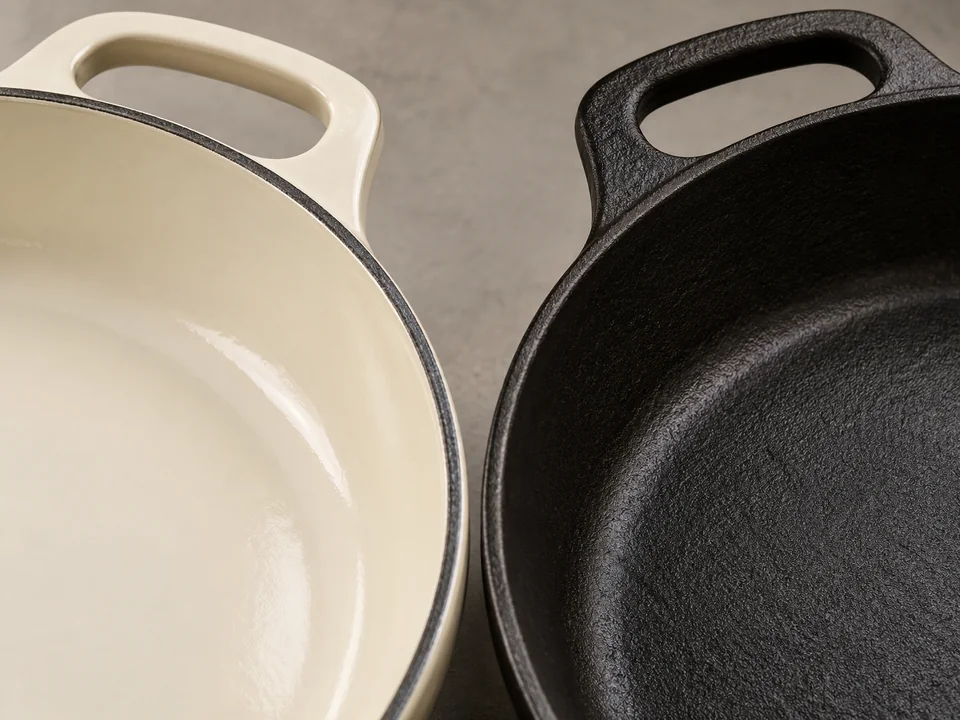
The main difference is the cooking surface. Enameled cast iron has a fired enamel coating over the cast iron body, while bare cast iron relies on the metal surface and its seasoning layer.
| Feature | Enameled Cast Iron | Bare Cast Iron |
|---|---|---|
| Cooking surface | Glass-like enamel coating | Exposed iron with seasoning |
| Routine seasoning | Usually not required on the enameled surface | Usually required |
| Cleaning | Generally straightforward | Requires careful drying |
| Rust resistance | Enamel protects covered areas | Can rust if left wet |
| Acidic foods | Generally well suited when the enamel is intact | Prolonged cooking may affect seasoning and flavor |
| Surface damage | Enamel can chip or crack | Can lose seasoning or develop rust |
| Appearance | Available in many colors and finishes | Usually dark, seasoned metal |
| Maintenance | Focuses on protecting the coating | Focuses on maintaining the seasoned surface |
Neither type is universally better. The right choice depends on how you cook, how much maintenance you prefer, and what you expect from your cookware.
What Does the Enamel Coating Change?
Enameled cast iron combines a cast iron body with a smooth, glass-like coating that is applied and fired during manufacturing. The cast iron provides the familiar weight and heat retention, while the enamel changes the surface that comes into contact with food.
On enameled cookware, the cooking surface does not rely on a seasoning layer in the same way as bare cast iron. This makes routine care simpler for many users and allows the cookware to be used for a wide range of everyday dishes.
Bare cast iron works differently. Its cooking surface develops a layer of polymerized oil through seasoning. With regular use and proper maintenance, this layer helps protect the metal from rust and contributes to the cooking surface.
The coating also affects the appearance of the finished product. Enameled cookware can be produced in a variety of exterior colors, interior finishes, and design combinations, making it suitable for coordinated cookware collections and private-label brands.
Maintenance, Seasoning and Cleaning
Maintenance is one of the most noticeable differences between the two types of cookware.
Caring for Enameled Cast Iron
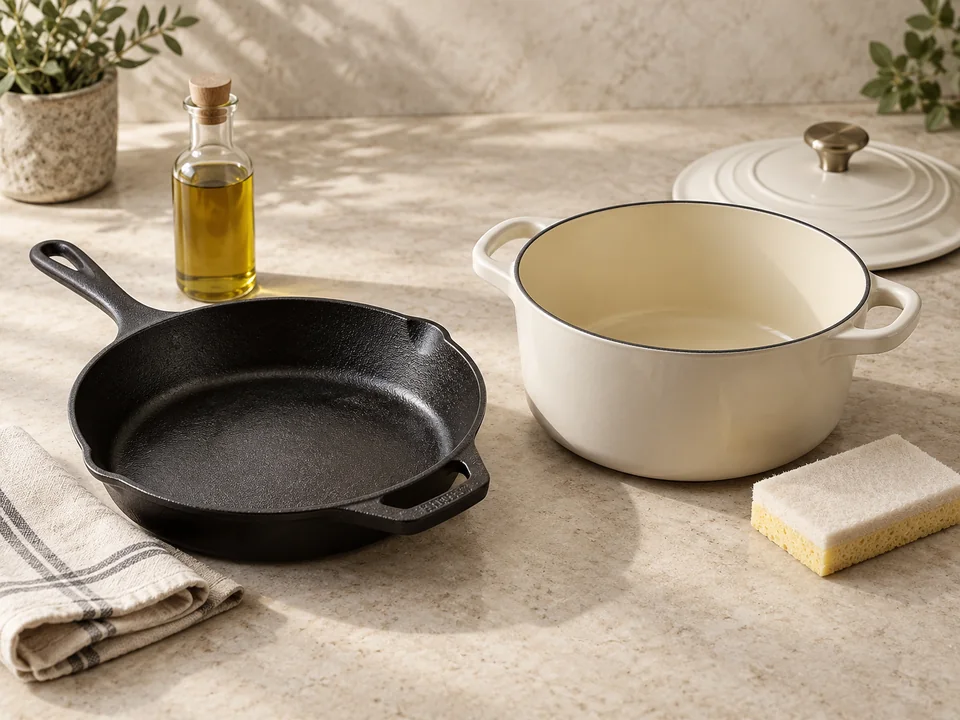
Enameled cast iron generally requires less routine maintenance. After cooking, allow the cookware to cool appropriately, wash it according to the manufacturer's instructions, and dry it thoroughly before storage.
Avoid dropping the cookware, striking the enamel against hard surfaces, or exposing a hot pot to sudden temperature changes. These actions can damage the coating.
Although some products may be labeled dishwasher-safe, hand washing is often a practical choice for preserving the finish over time. Always follow the care instructions for the specific product.
Caring for Bare Cast Iron
Bare cast iron requires more attention to moisture and seasoning. After washing, dry it thoroughly and apply a light layer of cooking oil when appropriate to maintain the seasoned surface.
If the seasoning becomes damaged or rust develops, the surface may need cleaning and re-seasoning. This maintenance is part of owning bare cast iron and is not necessarily a disadvantage for users who enjoy caring for their cookware.
The key distinction is simple: enameled cast iron requires you to protect the coating, while bare cast iron requires you to maintain the metal surface and its seasoning.
Cooking Acidic Foods and Everyday Dishes
Enameled cast iron is generally well suited to dishes containing tomatoes, vinegar, wine, citrus, and other acidic ingredients, provided the enamel is intact and the product is used according to its instructions.
The enamel creates a barrier between the food and the underlying iron. This makes enameled Dutch ovens particularly convenient for tomato-based sauces, slow-cooked stews, braised meats, soups, and dishes that require long cooking times.
Bare cast iron can also be used for many types of cooking. However, prolonged contact with acidic ingredients may interact with the iron surface, affect the seasoning, or introduce a metallic taste into some dishes.
For this reason, cooks who frequently prepare acidic sauces or long-simmered tomato dishes may prefer enameled cast iron. Those who mainly sear, fry, roast, or cook with a well-maintained seasoned surface may find bare cast iron a practical choice.
Neither type is limited to a single cooking method. The important considerations are the condition of the surface, the recipe, and the manufacturer's guidance.
Heat Retention and Cooking Performance
Both enameled cast iron and bare cast iron benefit from the heat retention of their cast iron bodies. Both can retain heat for extended periods, making them useful for braising, simmering, roasting, and serving dishes that benefit from steady warmth.
The enamel coating does not automatically make a pot heat better or worse. Actual cooking performance depends on factors such as the cookware's thickness, weight, shape, base design, lid fit, and how it is used.
Both types generally heat up more slowly than lightweight cookware. Preheating gradually and using an appropriate heat setting helps promote more controlled cooking.
For a Dutch oven, the shape and capacity also matter. A deeper pot may suit soups and stews, while a wider vessel may be convenient for browning ingredients before braising.
When comparing cookware, consider the complete design rather than judging performance by the surface finish alone.
Durability, Rust and Surface Damage
Both types of cookware can last for many years with appropriate care, but their potential problems are different.
Bare cast iron can develop rust if it remains wet or is stored in a damp environment. The seasoning may also wear away with use. These problems can often be addressed by cleaning the surface, removing rust where necessary, and restoring the seasoning.
Enameled cast iron is more resistant to rust on areas covered by intact enamel, but the coating introduces another consideration: impact damage. A strong knock, a drop, or severe thermal shock can cause the enamel to chip or crack.
Once the coating is damaged, the affected area may require special attention. Significant damage to a cooking surface should be assessed according to the manufacturer's guidance. Cookware with a deteriorating food-contact surface should not automatically be treated as suitable for continued use.
Neither material is indestructible. Bare cast iron requires protection from moisture, while enameled cast iron requires protection from impacts and sudden temperature changes.
For more information about cookware materials and surface safety, see our guide to Is Enameled Cast Iron Safe? Materials, Safety & What You Should Know.
Which Type of Cast Iron Cookware Should You Choose?
The best choice depends on your cooking habits and willingness to maintain the cookware.
Choose Enameled Cast Iron If You:
Prefer a cooking surface that does not require routine seasoning.
Frequently prepare soups, stews, tomato sauces, or braised dishes.
Want cookware available in a variety of colors and finishes.
Prefer straightforward everyday cleaning.
Value coordinated cookware designs for your kitchen or product collection.
Choose Bare Cast Iron If You:
Are comfortable maintaining a seasoned cooking surface.
Prefer traditional cast iron cookware.
Want a surface that can be re-seasoned when necessary.
Frequently sear, fry, roast, or cook with a well-maintained seasoned surface.
Do not mind paying closer attention to moisture and storage.
If you want the heat retention of cast iron with a smooth, colorful finish and less seasoning maintenance, enameled cast iron is often a practical option. If you prefer a traditional cooking surface and do not mind maintaining it, bare cast iron may suit you better.
For a closer look at enamel construction, materials, and product characteristics, read our guide to What Is Enameled Cast Iron? Materials, Construction & Key Characteristics.
What Should Cookware Buyers Consider?
For cookware brands, importers, and retailers, the choice between enameled and bare cast iron is also a product-line decision.
Enameled cast iron offers opportunities for color coordination, distinctive finishes, coordinated cookware sets, and private-label branding. Bare cast iron may appeal to customers looking for traditional cookware and a simpler surface design.
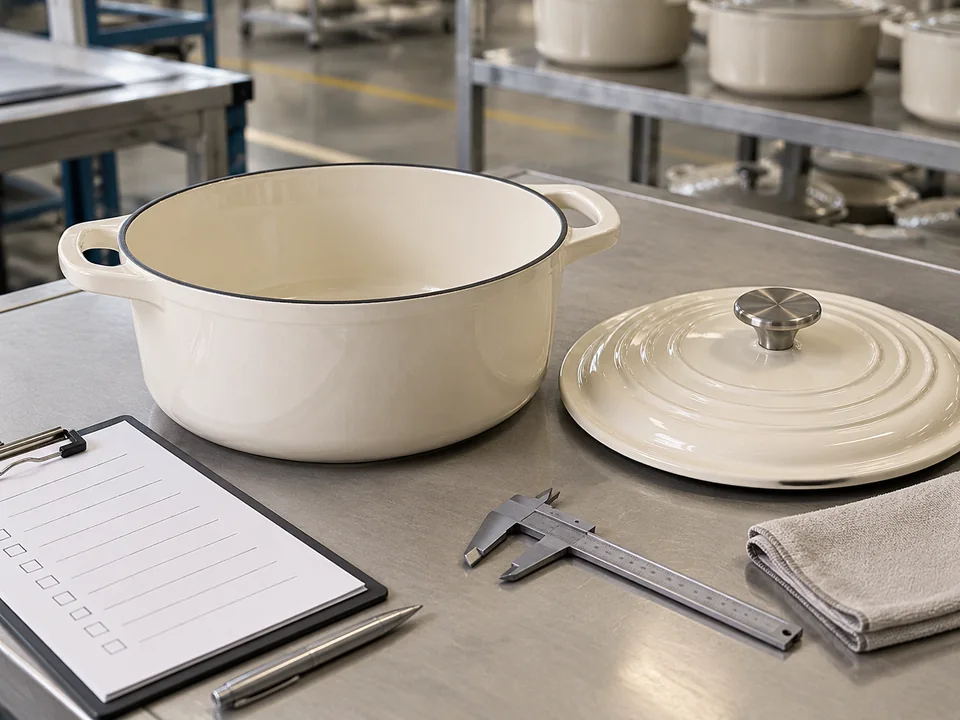
When evaluating enameled cookware from a manufacturer, buyers should look beyond the appearance of a sample. Consider the consistency of the enamel finish, visible surface defects, rim quality, lid fit, product dimensions, weight, packaging protection, and the manufacturer's quality-control procedures.
It is also important to confirm the intended market, applicable food-contact requirements, available test documentation, and whether the production sample accurately represents mass-production quality.
For OEM and private-label projects, discuss the desired product range, sizes, colors, logo application, packaging, and order quantities before finalizing the specification.
A well-planned cookware collection starts with choosing the right product type for the intended customer and then confirming that the product can be manufactured consistently.
The Bottom Line
Enameled cast iron and bare cast iron share the same basic material, but their surfaces create different maintenance requirements and cooking experiences.
Enameled cast iron is generally easier to maintain and is well suited to acidic dishes, while bare cast iron requires seasoning and careful drying but offers a traditional cooking surface that can be restored when necessary.
Before choosing, consider the dishes you prepare most often, the care routine you prefer, and the product features that matter most to you. For cookware brands and wholesale buyers, the same decision should also reflect the target customer, product assortment, finish requirements, and long-term quality expectations.