
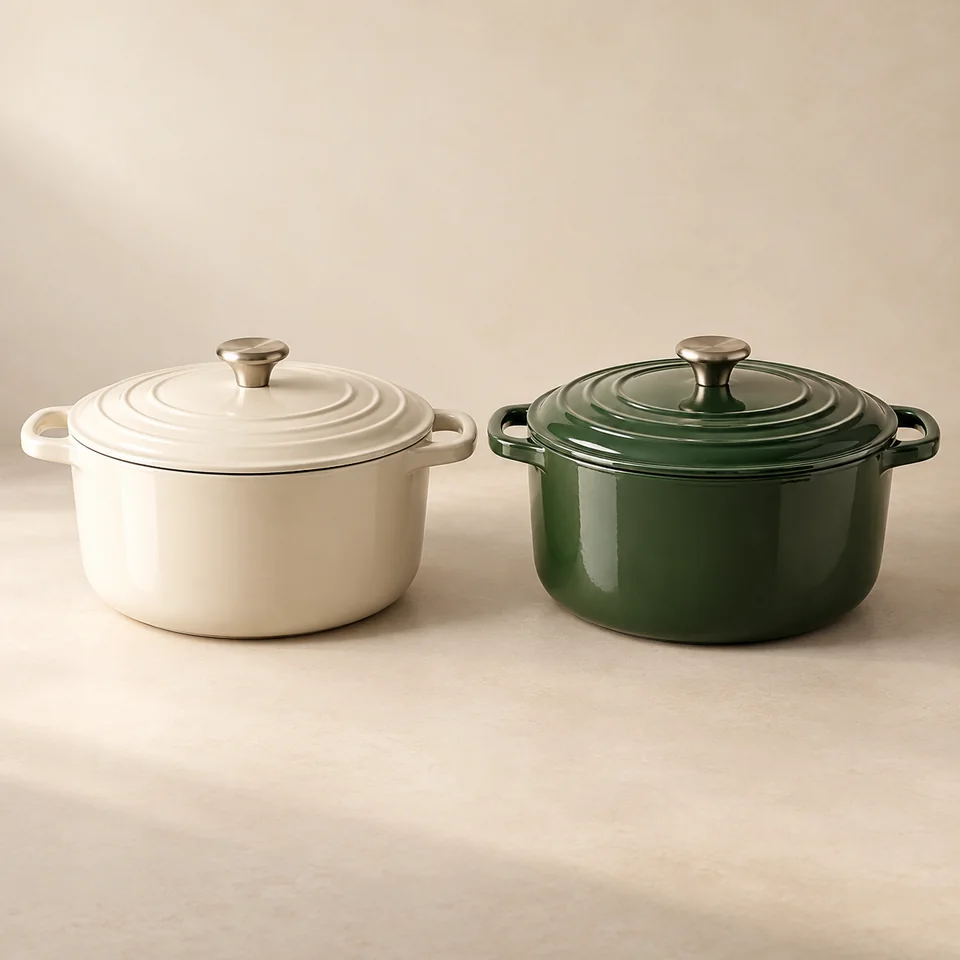
French oven and Dutch oven are two cookware names that often confuse shoppers. At first glance, they appear nearly identical: both are heavy, lidded cooking pots commonly used for braising, simmering, roasting, and preparing one-pot meals.
Some descriptions suggest that a French oven is a completely different product from a Dutch oven. In reality, the distinction is usually much smaller than it sounds.
Modern cookware brands frequently use both names for the same type of enameled cast iron pot. Understanding what each term means—and what it does not mean—can help you compare products more accurately.
This guide explains the terminology, the role of enamel coating, common cooking applications, and the product details that matter when choosing cookware.
What Is a French Oven?
A French oven is typically a heavy, thick-walled cooking pot made from enameled cast iron. It usually features sturdy side handles, a close-fitting lid, and a smooth enamel surface.
The combination of a cast iron body and an enamel coating makes these pots suitable for a wide range of everyday cooking tasks.
Common applications include slow-cooked stews, braised meats, soups, sauces, casseroles, and roasting.
French ovens are also known for their decorative finishes. Enameled cast iron can be produced in different exterior colors, interior finishes, and coordinated designs.
The term "French oven" is particularly associated with French-style enameled cookware. However, the name alone does not establish where a product was manufactured.
What Is a Dutch Oven?
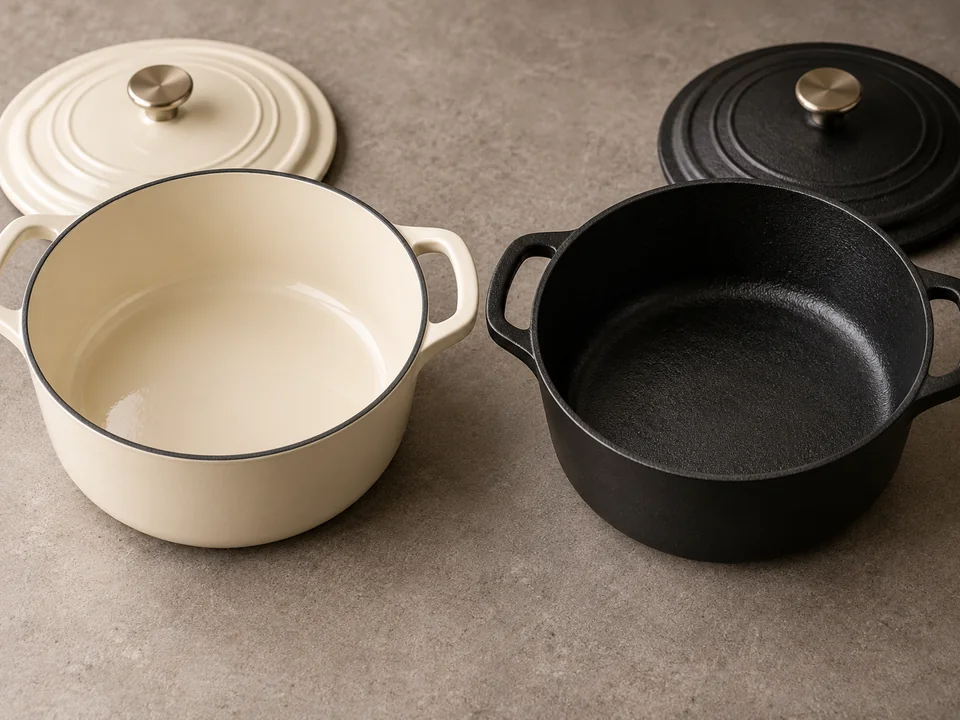
A Dutch oven is a heavy cooking vessel with thick walls and a close-fitting lid. Traditionally, many Dutch ovens were made from bare cast iron, which required seasoning to maintain the cooking surface.
Today, the term covers a broader range of products, including both traditional bare cast iron and modern enameled cast iron cookware.
Dutch ovens are valued for their ability to retain heat and support cooking methods that benefit from steady temperatures and covered cooking.
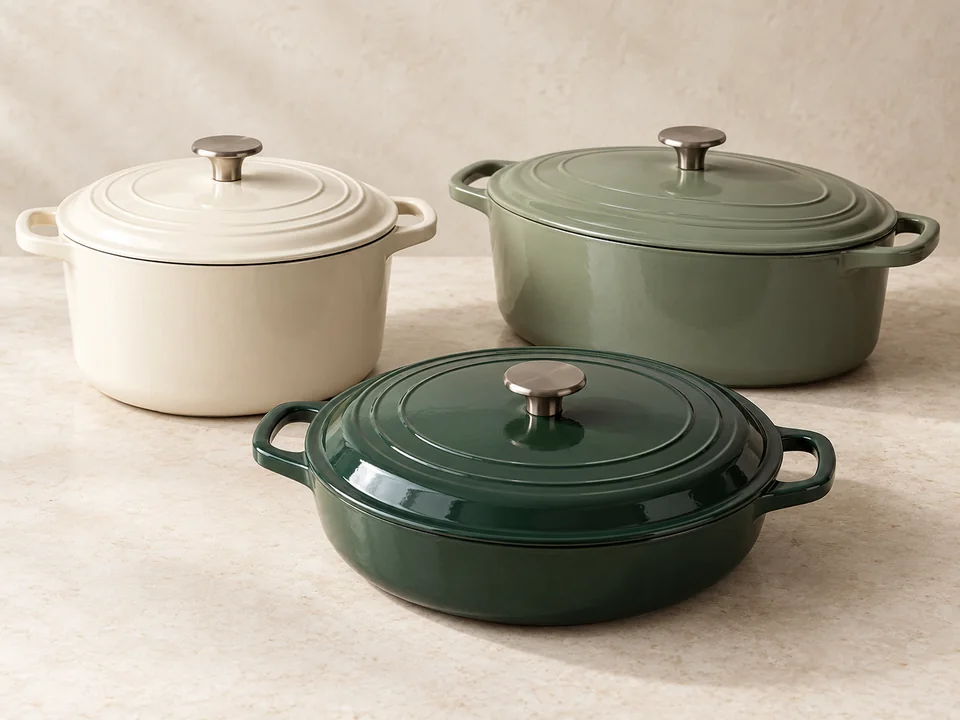
They are commonly available in round and oval shapes, with different capacities and designs for household cooking, larger meals, and specialized applications.
Importantly, a Dutch oven does not have to be uncoated. Many products marketed as Dutch ovens today have the same enameled construction associated with French ovens.
French Oven vs Dutch Oven: Key Differences
The names can describe the same product, but their usual meanings are slightly different.
| Feature | French Oven | Dutch Oven |
|---|---|---|
| General meaning | Usually an enameled cast iron pot | Broad term for a heavy, lidded cooking pot |
| Typical material | Enameled cast iron | Enameled or bare cast iron |
| Enamel coating | Usually present | May or may not be present |
| Seasoning | Usually unnecessary on the enameled surface | Depends on the cooking surface |
| Cooking methods | Braising, simmering, roasting, baking | Braising, simmering, roasting, baking |
| Available shapes | Round, oval, and other variations | Round, oval, and other variations |
| Colors and finishes | Often offered in decorative enamel colors | Depends on the product and coating |
| Manufacturing origin | Not determined by the name | Not determined by the name |
These distinctions describe common commercial usage, not a universal product classification.
When two pots have similar enameled cast iron construction, their cooking performance may be very similar even if one is labeled a French oven and the other a Dutch oven.
Why Are They Called French Ovens and Dutch Ovens?
The different names reflect the development of cast iron cookware and the terminology used by manufacturers.
Dutch ovens have a long history as heavy cooking vessels suitable for retaining heat and preparing food over extended periods.
Traditional examples often used uncoated cast iron and were designed for cooking over fireplaces, coals, or other heat sources.
Enameled cast iron cookware later became strongly associated with European and particularly French cookware manufacturing.
The enamel finish made it possible to produce cast iron cookware in a wider range of colors while changing the cleaning and seasoning requirements of the cooking surface.
Over time, "French oven" became a familiar name for the enameled style, while "Dutch oven" continued to be widely used for both traditional and enameled products.
The distinction is therefore more about naming conventions and product history than two fundamentally different cooking technologies.
Does a French Oven Cook Differently from a Dutch Oven?
Not necessarily.
If both products are made from enameled cast iron and have comparable dimensions and construction, their cooking characteristics are likely to be similar.
The cast iron body contributes to heat retention, while the lid and vessel design influence moisture retention, internal cooking space, and ease of use.
More meaningful differences may come from the specific product design.
Enamel Finish
Enameled cookware has a fired, glass-like coating that covers the cooking surface. A properly maintained enamel surface generally does not require routine seasoning and is suitable for a wide range of ingredients.
Bare cast iron uses a seasoned surface that requires a different maintenance routine.
However, an enameled Dutch oven and an enameled French oven may use essentially the same surface construction.
For a detailed comparison of coated and uncoated cookware, see our guide to Enameled Cast Iron vs Cast Iron.
Shape and Capacity
French ovens and Dutch ovens are available in different shapes and sizes.
Round pots are commonly used for soups, stews, braising, and everyday meals. Oval models can provide additional length for certain cuts of meat and larger ingredients.
Capacity also affects how much food a pot can accommodate.
These differences are related to the individual product's dimensions, not whether it is called a French oven or a Dutch oven.
Lid and Handle Design
Lid weight, fit, knob material, and handle construction influence how convenient the cookware is to use.
A well-fitting lid helps retain moisture during covered cooking, while appropriately designed handles make the pot easier to lift and move.
When evaluating oven use, check the temperature rating of the complete product, including the lid and knob.
Which Should You Choose for Everyday Cooking?
Instead of choosing based on the name, compare the features that will affect your cooking experience.
1. Check the cooking surface.
Confirm whether the pot has an enamel coating or an exposed cast iron surface. This influences seasoning requirements, cleaning, and surface care.
2. Compare the size and shape.
Select a capacity suitable for your normal cooking quantities. Also consider whether a round or oval pot is better suited to the dishes you prepare.
3. Consider how you will use it.
For soups, braises, sauces, and everyday one-pot cooking, an enameled cast iron Dutch oven or French oven can be a practical option.
For traditional bare cast iron cooking, choose a product designed for that purpose and follow its seasoning and care instructions.
4. Review the complete product specifications.
Look at the pot's weight, dimensions, lid fit, handle design, enamel finish, and manufacturer's care instructions.
The name on the product listing should be a starting point—not the deciding factor.
What Should Cookware Brands and Wholesale Buyers Know?
For cookware importers, retailers, and private-label brands, French oven and Dutch oven are also important product-description terms.
Different customers may use different names when searching for similar cookware.
In the United States, "Dutch oven" is a widely recognized product term. "French oven" and "cocotte" may also appear in cookware collections, particularly when emphasizing enameled cast iron or French-style design.
When preparing product listings, catalogs, or wholesale specifications, clear product descriptions are more useful than relying on terminology alone.
Use Accurate Product Names
For an enameled cast iron product, a descriptive name such as "Enameled Cast Iron Dutch Oven" clearly identifies both the material and the product type.
"French Oven" can be used as additional product terminology where appropriate, provided the description accurately reflects the product.
Avoid suggesting that the cookware was manufactured in France unless that claim is factually supported.
Confirm Product Specifications
For wholesale purchasing and private-label development, request information about:
Material and enamel surface construction.
Capacity, diameter, depth, and weight.
Available shapes and lid designs.
Enamel color and finish options.
Logo customization and packaging requirements.
Quality-control procedures and relevant food-contact documentation.
Order quantities and production arrangements.
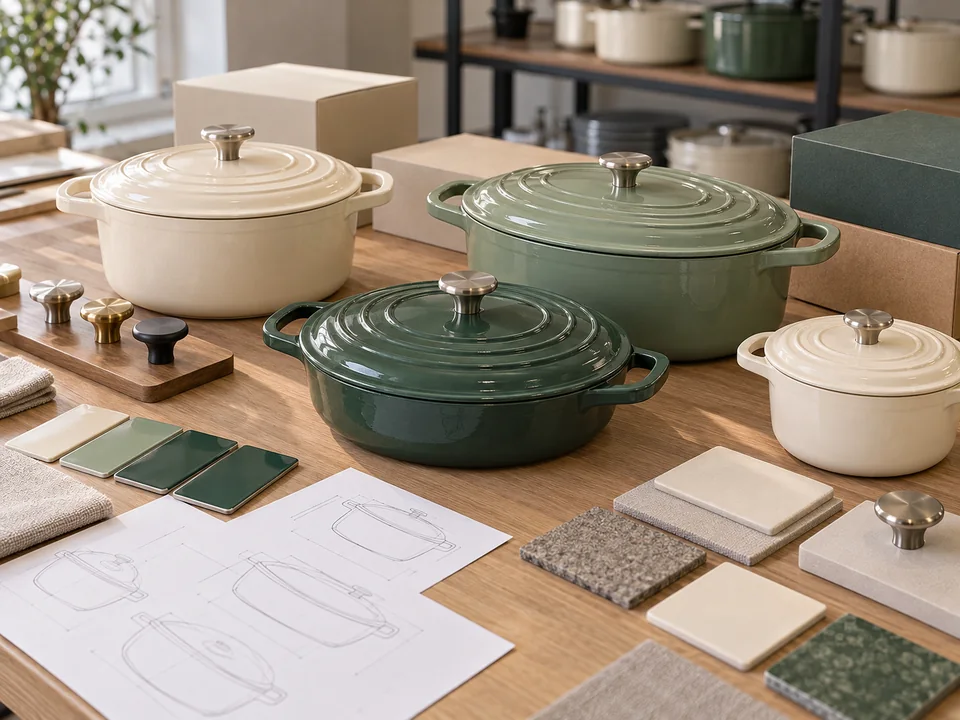
Consistent product specifications help buyers compare samples, approve product designs, and manage the finished assortment.
Plan a Clear Product Collection
A well-organized cookware collection does not need separate product ranges simply because some customers use the term "French oven" and others use "Dutch oven."
Instead, brands can organize products by actual characteristics such as shape, capacity, finish, and intended use.
For OEM and private-label projects, clearly defined specifications also help manufacturers and buyers communicate throughout product development and production.
The Bottom Line
In modern cookware terminology, a French oven is generally an enameled cast iron Dutch oven, and the two names are often interchangeable.
"Dutch oven" remains the broader term because it can describe both enameled and traditional bare cast iron cookware.
When choosing a product, focus on its materials, dimensions, enamel finish, construction quality, and intended use rather than assuming the name represents a different cooking vessel.
For brands and wholesale buyers, accurate terminology and detailed specifications are essential for creating clear product listings, evaluating samples, and developing consistent cookware collections.